Here’s Why:
- The virus lies dormant behind the blood-brain barrier where the immune system and antiviral drugs cannot get to it. Homeopaths, therefore, consider nosodes an invaluable tool to remind the immune system to keep fighting.
- The virus mutates into anti-viral resistant strains which do not respond to antiviral medication
- Many find the side effects of anti-virals too hard to cope with on a daily basis and therefore only take them when they are experiencing an outbreak.
- The common test for HSV looks for IgG and IgM antibodies your body created to guard against the virus. You have antibodies for any pathogen you were vaccinated against or may have been infected with. Hence the testing mechanism is looking for the defense against herpes and not the actual virus. Newer PCR DNA tests look for the herpes Virus itself and therefore are more accurate in understanding the present state of the Virus in the body. Once these are accepted, they may show that someone is actually free of the virus.
Whether you are suffering from Herpes or Not, it is a great idea to keep your immune system boosted.
Your immune system is the body’s only defense mechanism. Some people with Herpes have constant breakouts while others never have them. This is essentially because of the difference in their immune systems. Also, someone infected with herpes is most likely to transmit it when they are suffering from an outbreak or shedding the virus, both of which happen when their immunity is low.
Consult With one of Our Homeopathic or Ayurvedic Specialists Now. FOR FREE!
In order to understand and balance your constitution or boost your immune system.
Now is a great moment to start the journey back to health and freedom! Each journey begins with one step.
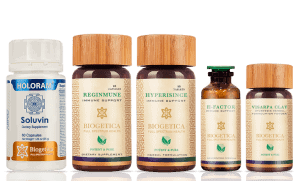
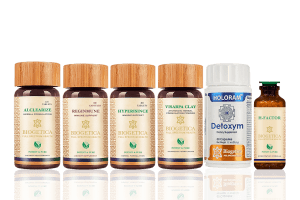
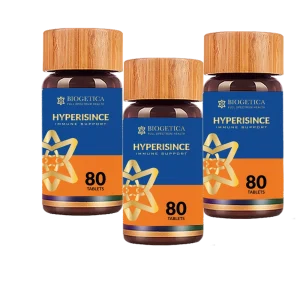
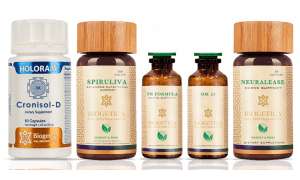
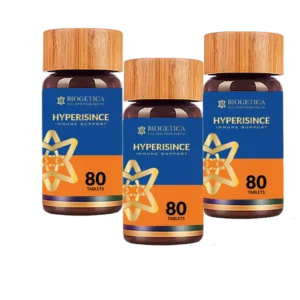
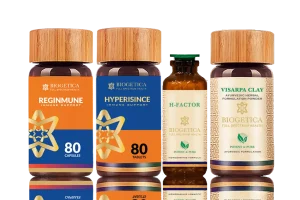
Only Biogetica practitioners have access to all-natural products including the patent published Hyperisince, which contains the rare herb Hypericum mysorense and H-factor nosodes.
Our Approach
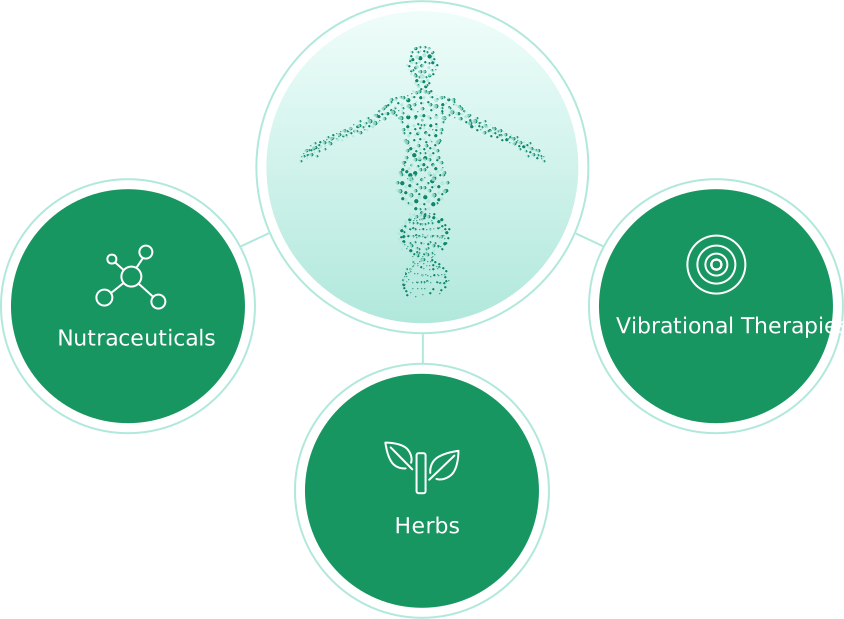
Biogetica’s mission is to provide you with integrated natural solutions that target root issues across the physical, energetic and informational spectrum of your life. Our Doctors research all possible ingredients and combine them synergistically into kits to potentially lead you back to health and freedom. Biogetica’s kits are a combination of traditional herbs, advanced nutraceuticals, and resonance homeopathic formulations, working in unison along with local applications.
This combination is traditionally believed to work by: **
- Enhancing the immune function within your body
- Detoxifying blood and cooling your body.
- Restoring the pH balance in your body by providing alkalizing herbal formulations.
- Restoring skin health.
Biogetica’s integrative approach towards reclaiming your health and freedom represents the convergence of Allopathic medicine, Yogic Sciences, Quantum Physics, modern Bio-energetic and ancient natural healing systems such as Ayurveda, Chinese Medicine, Shamanism and Homeopathy.
Biogetica has a unique and comprehensive Holographic model of healing which synthesizes all the medicine systems to simultaneously ease physical, mental, emotional layers of Your Being. Biogetica harmonizes your entire being naturally by appealing to the balancing forces of nature. From medication to meditation is the Biogetica way! We are here to help you Bloom!
Each cross-disciplinary Biogetica kit is designed to work in the following ways:
- Our Nutraceutical and dietary supplement formulas provide specific and necessary nutrition to the cells.
- Our custom-formulated Ayurvedic remedies and herbs work to balance the manifestations of 5 elements that govern all functions of the body.
- Our unique Resonance Homeopathy reminds the body of optimal or pathogenic functions, thereby coaxing it to adapt and reach homeostasis.
- Oligo-elements balance the blocked enzymes and hormonal functions.
- Vibrations subtly change the mental and emotional patterns contributing to the disease pattern
So, why wouldn’t you want to heal your ailment at its root, the Biogetica way?
Biogetica’s approach to healing is based on the following aspects:
1. Heal the Entire Being
2. Look for Natural Solutions
3. Appeal to the Balancing Forces Inherent in all Nature
4. From Medication to Meditation
- Heal The Entire Being:
Biogetica has a unique and comprehensive Holographic model of healing which synthesizes all the traditional natural health systems to simultaneously ease physical, mental, emotional layers of your being.
You, as a living, thinking, feeling, vibrating being, are much more than a collection of inter-related chemical processes. You are life itself. Life can never be reduced to a series of chemical reactions as chemical reactions cannot create life. Every thought, emotion, vibration or action leads to a series of chemical changes in the body. Biogetica recognizes this and balances the ENTIRE BEING, bringing mind, body, and soul into harmony. Treating an ailment on a molecular level alone, seldom has a lasting effect as the untreated social, emotional, mental, spiritual and energetic patterns cause the ailment to manifest once again on a physical plane. Holistic healing is necessary for lasting relief. Biogetica, therefore, uses Resonance Homeopathic to harmonize the entire being; flower essences to attune the mind; Ayurvedic, Tibetan, and Chinese herbs to balance the energetic and the physiological manifestation of the five elements; and nutraceuticals to coordinate cellular nutrition.
It is now a known fact that every thought and emotion has a corresponding peptide secretion from the hypothalamus. Each cell has numerous receptors for these peptides, and the peptides greatly change the state of the cell. Hence, each thought or emotion is a signal that changes the state of our cells and alters our being. When our mind is panicky, every cell in our body is in panic. Biogetica, therefore, works on emotional and mental levels, along with cellular levels, in order to ensure that the entire being is brought into harmony – from the subtle emotions and thoughts, down to gross cells and vice versa. This is our understanding and implementation of holographic healing.
- Look for Natural Solutions:
Our bodies are made of and supported by nature and therefore can only be healed by nature in the long term. Chemicals are often necessary for immediate change in an acute situation, but tend to do the body more harm than good in the long run. Hence, Biogetica’s Doctors are dedicated to providing natural solutions that are supported by evidence and prior use. To us, the argument is fairly obvious: One would use wood to fix a desk made of wood or metal to fix a car made of metal, so why use chemicals to fix a body made of nature?
Nature has blessed the Earth with natural remedies and healing mechanisms. It would be wise not to ignore them. The intelligence of nature is much greater than that of man.
- Appeal to the Balancing Forces Inherent in all Nature:
Life cannot be recreated with chemical interactions and there is much more to life than molecular interactions. Our bodies are the most advanced pharmacies on the planet and millions of functions happen each minute with astounding precision. Biogetica therapies are designed to appeal to the balancing forces apparent in all nature by reminding and stimulating the body towards a certain function. The nutraceuticals in our kits provide specific nutrition for a function, the herbs in our kits balance the terrain of the body so that it is able to perform that function and the resonance homeopathies are designed to remind the body to be in resonance with that very function.
- Over time, we have learnt that interfering with a body’s chemical processes only causes further complications, as this essentially goes against the balancing homeostatic forces of nature. When we inject something artificially, the body stops making the effort to produce it on its own.
Below are some examples that illustrate our point:
- Homeopathic coffee is coffee diluted past 106 and potentized. There are no molecules of coffee left in the mixture, but the water remembers the informational vibration of the coffee molecule. When ingested, this mixture alters the vibration in the water, which composes 70% of the human body. The body is instantly given information on a new vibration which will keep it awake and compensates by putting you to sleep. Sounds far-fetched? Try it!
- A Diabetic person’s pancreas produce inadequate insulin, causing an imbalance in his/her blood glucose levels. Western Medicine combats this by injecting the patient with insulin, which could cause the Beta cells to slacken further and eventually reduce and even hamper normal insulin production. Natural sciences prefer to stimulate the pancreas to function normally and regulate the insulin production, instead of artificially dosing the body with hormones. Therefore, Natural sciences prescribe Ayurvedic herbs that heal gross abnormalities in the pancreas, and further supplement the treatment by supplying vibrational information of insulin and healthy pancreatic tissue. This will achieve the purpose of reminding and stimulating the pancreas to function regularly.
- A Herpes patient gets recurrent outbreaks because the virus remains dormant in the nerve bodies and attacks whenever one’s immunity is compromised. Biogetica administers an imprint containing energetic information on the virus. Each dose serves as a reminder for the person’s immune system to fight the virus at its basic level, while it lies dormant. Herpes imprints are not a herpes cure, herpes treatment or herpes vaccine.
- We augment imprint therapy with herbs from numerous traditions. Together, they may support the normal structure and functioning of the immune system.
- From Medication to Meditation:
Biogetica measures its success in the lives that it improved. We do not believe in constant life-long medication, and wish to see you learning and leading happier & healthier lives. With this goal in mind, we offer lifestyle changes and meditations designed to transform your being and ease any emotional, mental and karmic constrictions, which are often the root cause of many problems. We encourage all customers to make conscious learning and meditation a part of the healing process. We must remember that the quality of our lives is not determined by external situations, but by internal conditions. We provide you the tools to manage your internal self better and hope you use them for growth and happiness. We ensure that you wake up in a world where you never hear the words ‘there is no cure!’ Good health and freedom involve every aspect of our being including diet, lifestyle, exercise, emotional states, thoughts and energetic patterns. Biogetica Doctors have therefore designed diet, nutrition, exercise, and meditation protocols specific to various life situations. We encourage you to actively partake in these for best results.
Unique 100% Natural Multi-Disciplinary Kits
Browse through our FULL SPECTRUM Immunity Boost Kits
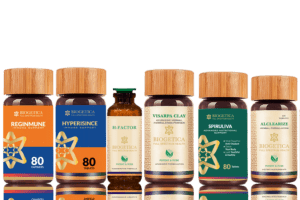
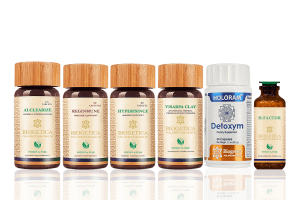
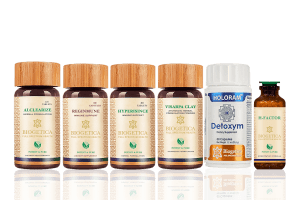
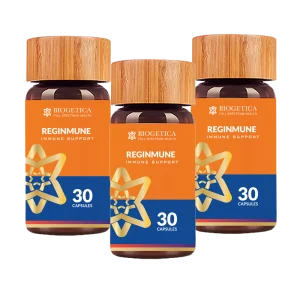
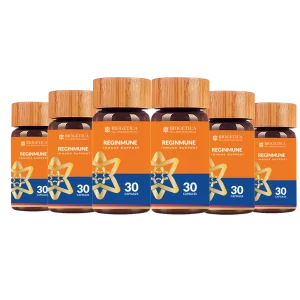
Our products are sold in unique multi-disciplinary kits that are 100% natural and not available anywhere else. Try our Products Now! Our Unconditional 100 % Money Back Guarantee is Valid for 90 days. **
We put people before profits and will deliver these services to you against any donation if you truly cannot afford them. You may email us on [email protected] if you wish to avail of this donation-based program.





 40
Days Supply
40
Days Supply 100% Money Back Guarantee